From the project
Field research → system
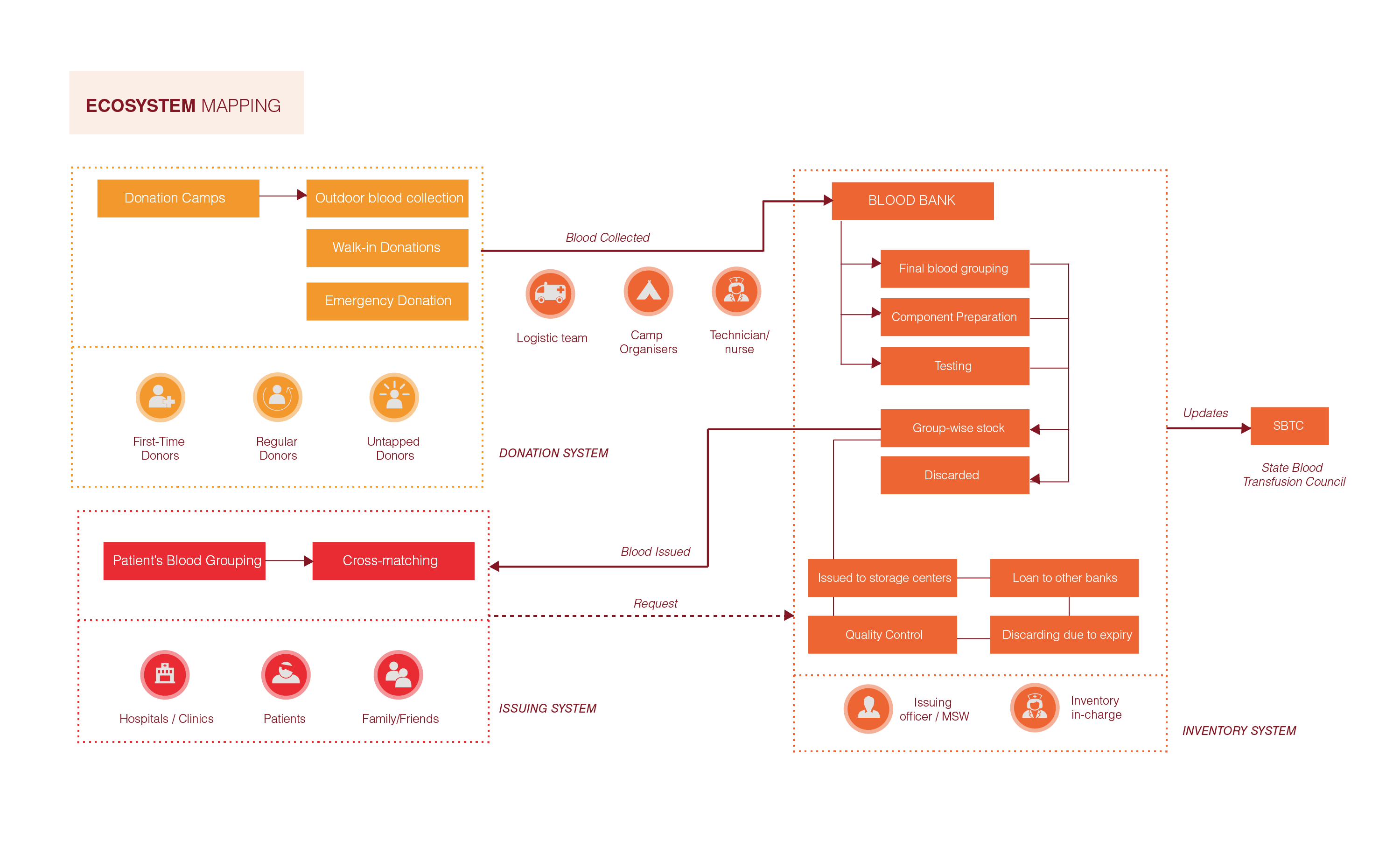
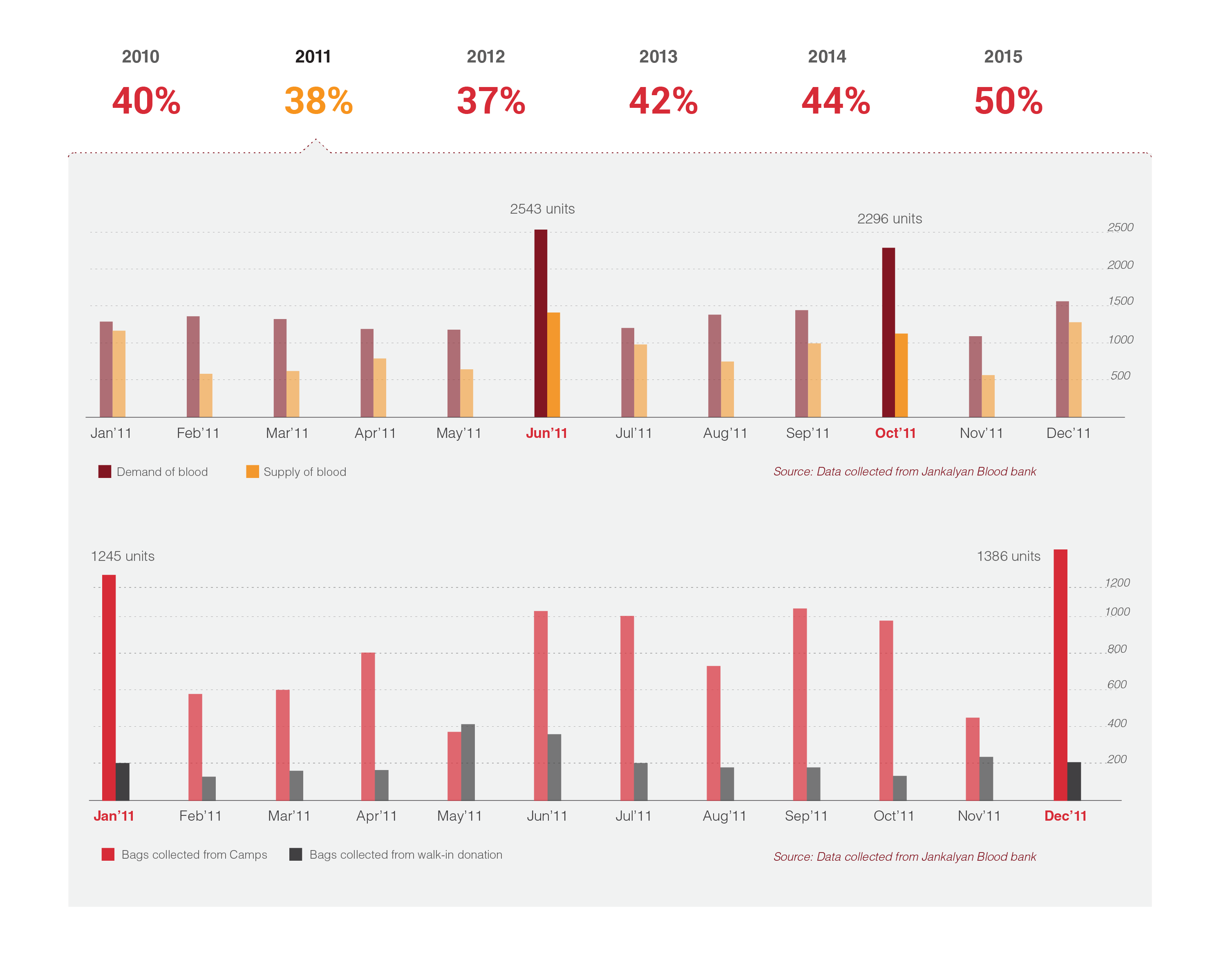
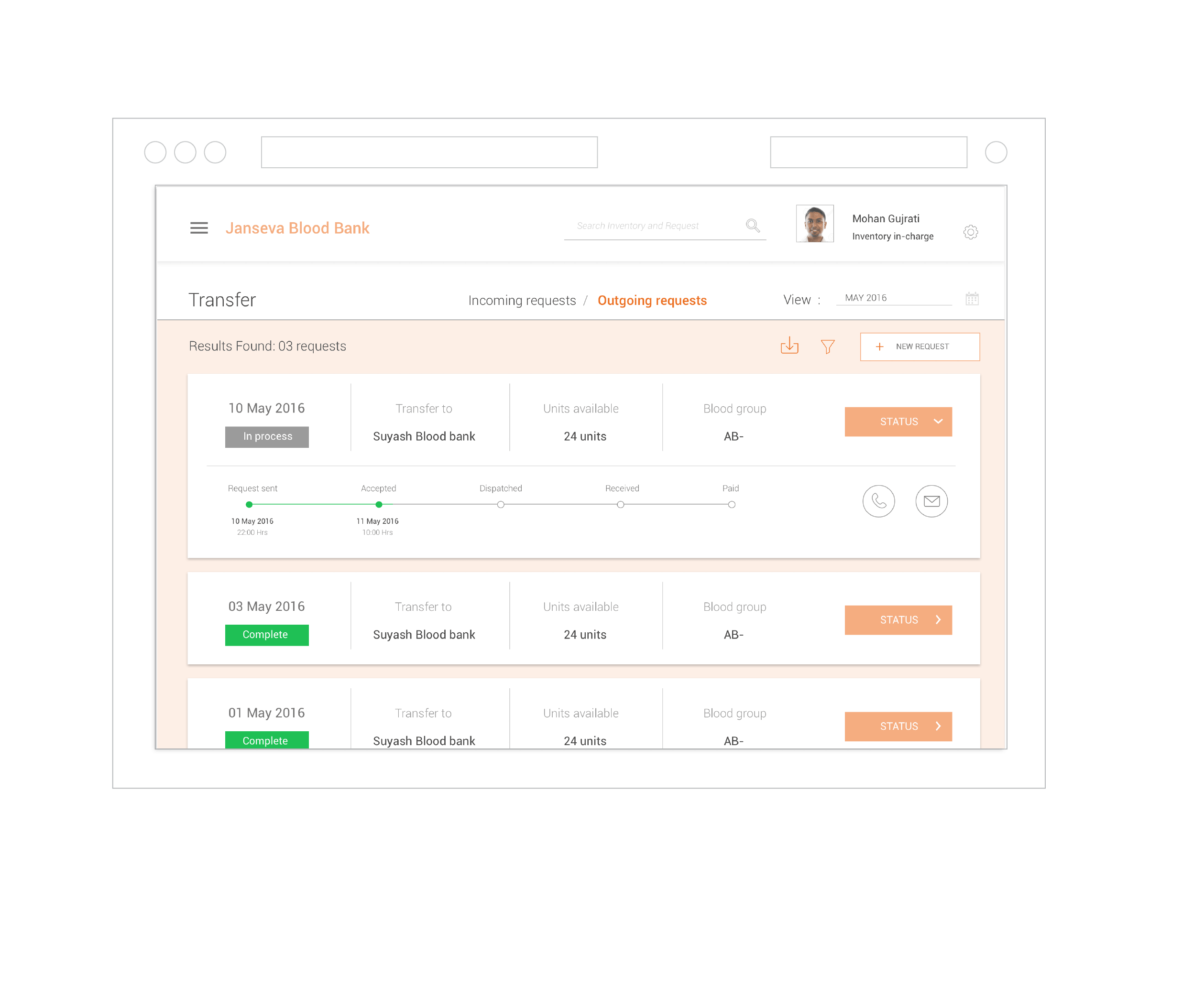
Ethnographic field research across donors, recipients, and blood banks that exposed a predictable supply–demand gap — and a smart-inventory service now approved and in execution by the Nashik city council.
India needs 40M+ units of blood a year, yet information on availability is poor and supply is mismatched to demand — so emergencies turn into desperate searches while collected blood expires unused.
Where exactly does the blood-bank system break across donors, recipients, and banks — and where is the highest-leverage place to intervene?
A smart-inventory + camp-prediction system, validated as most feasible of three concepts, approved by the Nashik city council and in execution.
In a city of ~1.4M with only 13 under-equipped blood banks, the gap between supply and demand was structural, not random. I worked in a two-person team and led the design research end to end.
I deliberately scoped from the national problem down to one city, because a life-or-death systems problem can only be fixed where you can actually observe its mechanics.
This is a behavior-and-coordination problem invisible from a desk. Shadowing in donation camps and maternity wards revealed real practice; interviews with in-charges exposed operational constraints; surveys quantified donor barriers. Together they located the gap precisely.
Constraints I balanced: Ten weeks and two people meant I sequenced secondary research first to focus scarce field time, and analyzed across five lenses (process, people, technology, policy, communication) to avoid a narrow fix.
What I'd change: I'd build a lightweight pilot of the prediction tool with one bank's historical data to quantify waste reduction before the council review — evidence over projection.
What I'd keep: Resisting the obvious 'donor app.' Letting field research overturn the assumed solution is what made the outcome real.
What I learned: In systems problems, the leverage point is rarely where the pain is loudest — here, it was quiet operational planning, not donor recruitment.
Task flows for the three systems developed.